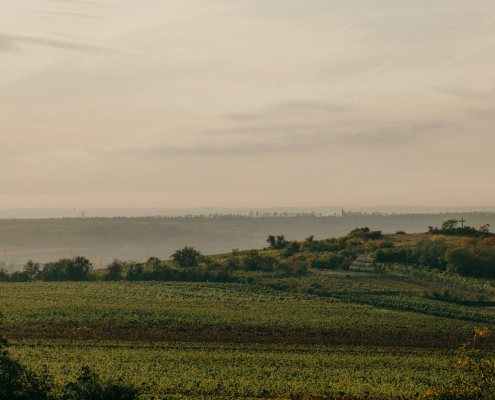
Spring has arrived in the Weinviertel – and with it, an important and intensive phase of work in the wine year. What will later taste delicious in the glass begins with a great deal of manual labor, patience, and – as this year – a wistful glance towards the rain clouds.
BUPPING OUT: THE WINE YEAR BEGINS
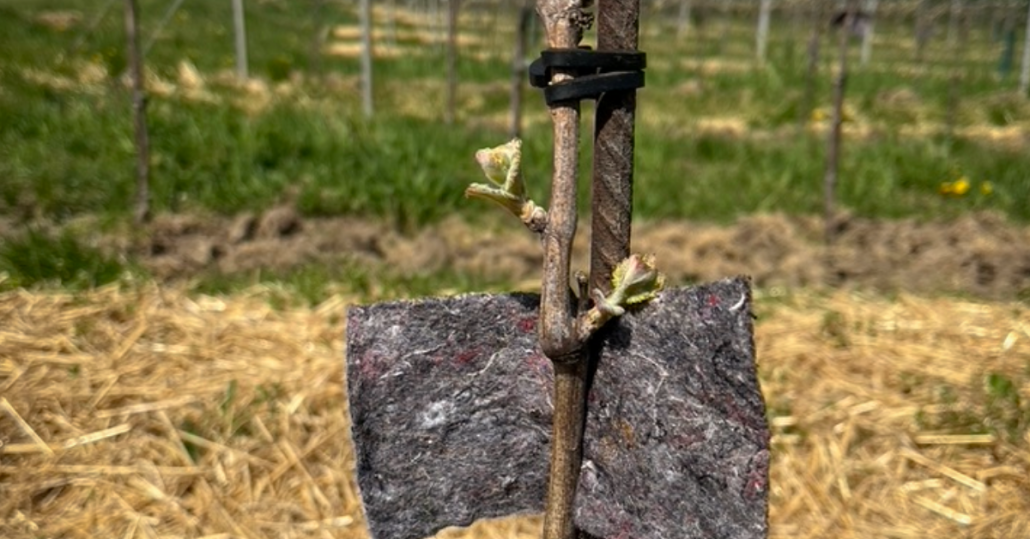
Nature is currently teeming with life. Everything is sprouting, the birds are chirping – and we are back outdoors every day. In our young vineyards, we have hung strips of felt containing predatory mites to increase their population. These mites decimate the harmful spider mites and help the young shoots to grow. No chemicals – just pure nature.
REPLANTING: EVERY VINE COUNTS
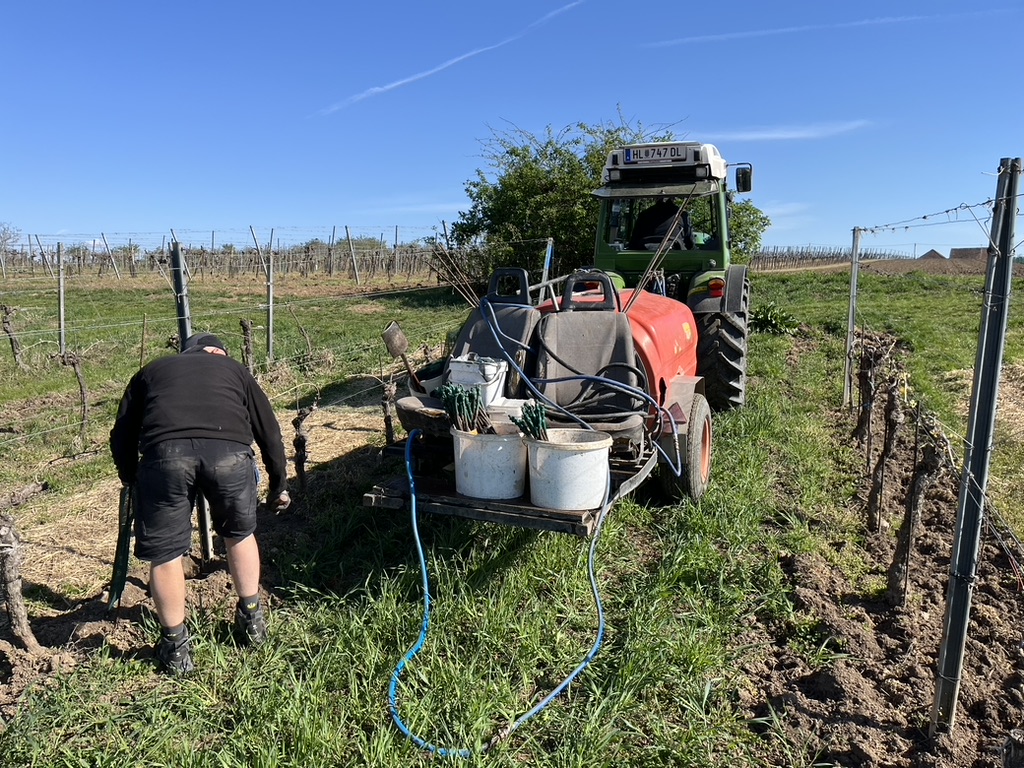
In our vineyards, we regularly experience the loss of individual vines. These are regularly replanted – in dry locations like ours, this is a very labor-intensive process.
To ensure that the young plants thrive alongside the older vines, we use water-retaining hydrogel (Polygrain) and humus fertilizer right from the planting stage. Then: drilling, planting, watering.
Due to the drought this spring, we have to water the young vines again to prevent them from drying out. This may need to be repeated several times. We hope it will finally rain again.
THIS IS HOW A GOOD VINTAGE STARTS
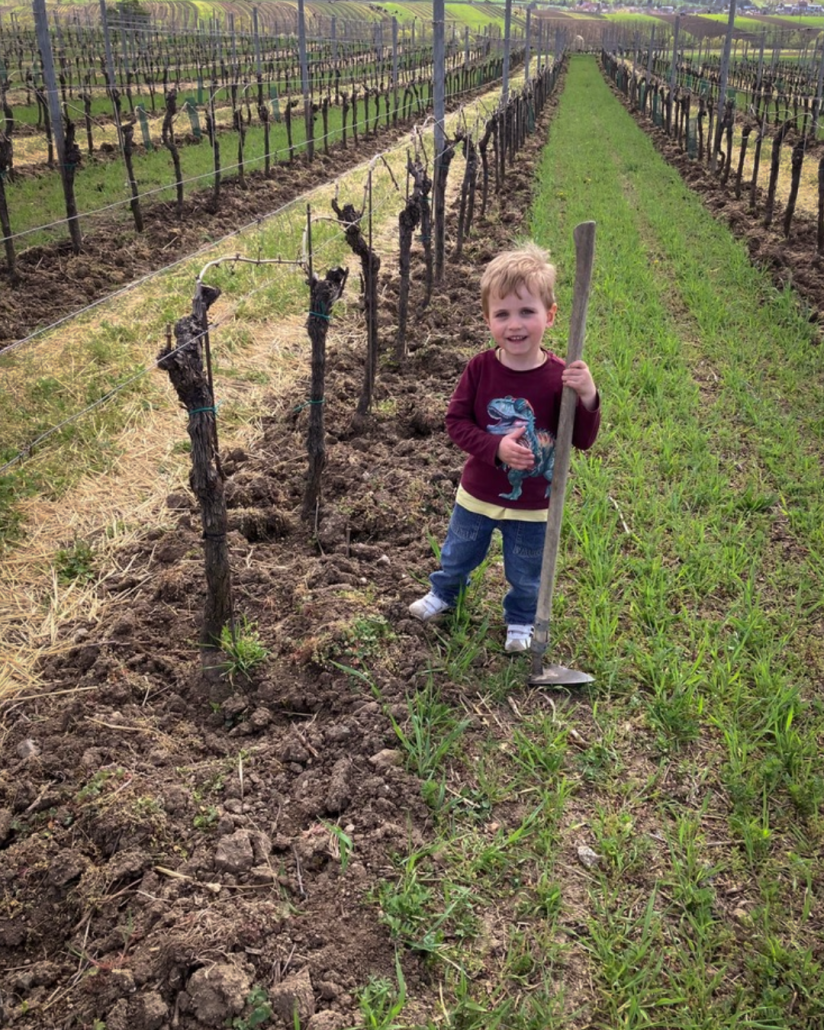
The 2026 vintage is just beginning to take shape. Whether it will be a great one, giving us a truly special Grüner Veltliner from the Weinviertel region, we don’t yet know. We’re doing everything we can to make it happen.
Winemaking is about trusting nature – and your own work.
more blog postsweitere Blogbeiträge
 https://www.zull.at/wp-content/uploads/2026/01/OeTW_Zull_Julius_Hirtzberger_L1120063.jpg
1333
2000
Phillip Zull
https://www.zull.at/wp-content/uploads/2020/03/Zull_logo-300x117.png
Phillip Zull2026-07-17 18:26:312026-09-07 06:50:34Excursion destinations in the Retzerland region: Four tips around our winery
https://www.zull.at/wp-content/uploads/2026/01/OeTW_Zull_Julius_Hirtzberger_L1120063.jpg
1333
2000
Phillip Zull
https://www.zull.at/wp-content/uploads/2020/03/Zull_logo-300x117.png
Phillip Zull2026-07-17 18:26:312026-09-07 06:50:34Excursion destinations in the Retzerland region: Four tips around our winery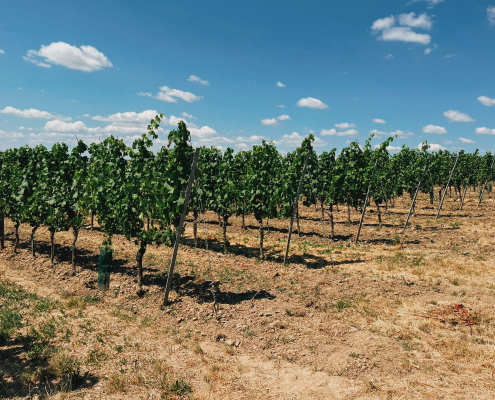 https://www.zull.at/wp-content/uploads/2026/07/WhatsApp-Image-2026-07-13-at-120326-3-VSCO.jpg
1200
1600
Phillip Zull
https://www.zull.at/wp-content/uploads/2020/03/Zull_logo-300x117.png
Phillip Zull2026-07-17 17:50:032026-09-07 06:50:35Green Harvest: Why We Cut Grapes in Midsummer
https://www.zull.at/wp-content/uploads/2026/07/WhatsApp-Image-2026-07-13-at-120326-3-VSCO.jpg
1200
1600
Phillip Zull
https://www.zull.at/wp-content/uploads/2020/03/Zull_logo-300x117.png
Phillip Zull2026-07-17 17:50:032026-09-07 06:50:35Green Harvest: Why We Cut Grapes in Midsummer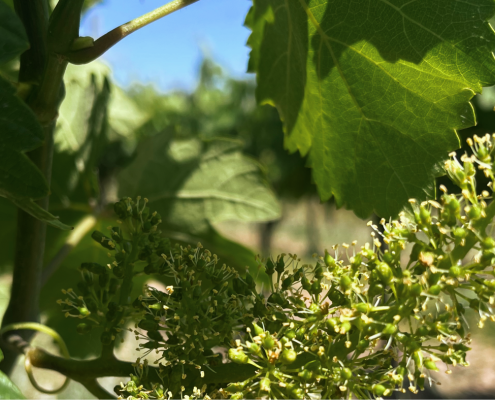 https://www.zull.at/wp-content/uploads/2026/06/ZULL-BLOG-FOTOS-2-1.png
788
1400
Phillip Zull
https://www.zull.at/wp-content/uploads/2020/03/Zull_logo-300x117.png
Phillip Zull2026-06-12 09:57:352026-09-07 06:50:37Foliage work and vine blossom: June in the vineyard
https://www.zull.at/wp-content/uploads/2026/06/ZULL-BLOG-FOTOS-2-1.png
788
1400
Phillip Zull
https://www.zull.at/wp-content/uploads/2020/03/Zull_logo-300x117.png
Phillip Zull2026-06-12 09:57:352026-09-07 06:50:37Foliage work and vine blossom: June in the vineyard https://www.zull.at/wp-content/uploads/2026/05/zull-mai-blog-3.png
628
1200
Phillip Zull
https://www.zull.at/wp-content/uploads/2020/03/Zull_logo-300x117.png
Phillip Zull2026-05-13 13:18:192026-09-07 06:50:38Spring Work in the Weinviertel – How the 2026 Vintage Begins
https://www.zull.at/wp-content/uploads/2026/05/zull-mai-blog-3.png
628
1200
Phillip Zull
https://www.zull.at/wp-content/uploads/2020/03/Zull_logo-300x117.png
Phillip Zull2026-05-13 13:18:192026-09-07 06:50:38Spring Work in the Weinviertel – How the 2026 Vintage Begins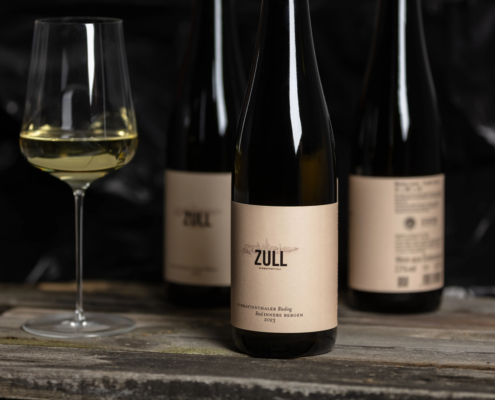 https://www.zull.at/wp-content/uploads/2024/11/zull3-416-scaled.webp
1707
2560
Phillip Zull
https://www.zull.at/wp-content/uploads/2020/03/Zull_logo-300x117.png
Phillip Zull2026-02-27 15:13:552026-09-07 06:50:41Dates 2026
https://www.zull.at/wp-content/uploads/2024/11/zull3-416-scaled.webp
1707
2560
Phillip Zull
https://www.zull.at/wp-content/uploads/2020/03/Zull_logo-300x117.png
Phillip Zull2026-02-27 15:13:552026-09-07 06:50:41Dates 2026 https://www.zull.at/wp-content/uploads/2026/01/OeTW_Zull_Julius_Hirtzberger_B0068560.jpg
1500
2000
Phillip Zull
https://www.zull.at/wp-content/uploads/2020/03/Zull_logo-300x117.png
Phillip Zull2026-01-30 12:43:432026-09-07 06:50:4217.5 points from Jancis Robinson for our Äussere Bergen
https://www.zull.at/wp-content/uploads/2026/01/OeTW_Zull_Julius_Hirtzberger_B0068560.jpg
1500
2000
Phillip Zull
https://www.zull.at/wp-content/uploads/2020/03/Zull_logo-300x117.png
Phillip Zull2026-01-30 12:43:432026-09-07 06:50:4217.5 points from Jancis Robinson for our Äussere Bergen https://www.zull.at/wp-content/uploads/2024/11/PamelaSchmatz_J9A1756-Verbessert-RR-1-e1732290758320.webp
1333
2000
Phillip Zull
https://www.zull.at/wp-content/uploads/2020/03/Zull_logo-300x117.png
Phillip Zull2025-12-17 10:47:562026-09-07 06:50:43Weinviertel DAC Reserve Äußere Bergen 2023: 95 Points
https://www.zull.at/wp-content/uploads/2024/11/PamelaSchmatz_J9A1756-Verbessert-RR-1-e1732290758320.webp
1333
2000
Phillip Zull
https://www.zull.at/wp-content/uploads/2020/03/Zull_logo-300x117.png
Phillip Zull2025-12-17 10:47:562026-09-07 06:50:43Weinviertel DAC Reserve Äußere Bergen 2023: 95 Points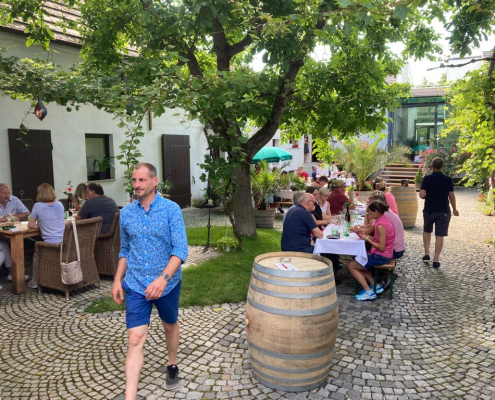 https://www.zull.at/wp-content/uploads/2022/04/21e44181-1614-4c0b-8479-0b8caa15ee5d.jpg
768
1024
Phillip Zull
https://www.zull.at/wp-content/uploads/2020/03/Zull_logo-300x117.png
Phillip Zull2025-04-10 11:11:592026-09-07 06:50:48Weintour Weinviertel 2026
https://www.zull.at/wp-content/uploads/2024/11/zull3-416-scaled.webp
1707
2560
Phillip Zull
https://www.zull.at/wp-content/uploads/2020/03/Zull_logo-300x117.png
Phillip Zull2025-02-23 21:03:092026-09-07 06:50:49Dates 2025
https://www.zull.at/wp-content/uploads/2022/04/21e44181-1614-4c0b-8479-0b8caa15ee5d.jpg
768
1024
Phillip Zull
https://www.zull.at/wp-content/uploads/2020/03/Zull_logo-300x117.png
Phillip Zull2025-04-10 11:11:592026-09-07 06:50:48Weintour Weinviertel 2026
https://www.zull.at/wp-content/uploads/2024/11/zull3-416-scaled.webp
1707
2560
Phillip Zull
https://www.zull.at/wp-content/uploads/2020/03/Zull_logo-300x117.png
Phillip Zull2025-02-23 21:03:092026-09-07 06:50:49Dates 2025